Industry News
Index > NEWS > Industry News
Why Infrared Laser Has Become the Driving Force Behind AI-Era License Plate Recognition Traffic Surveillance
Abstract:
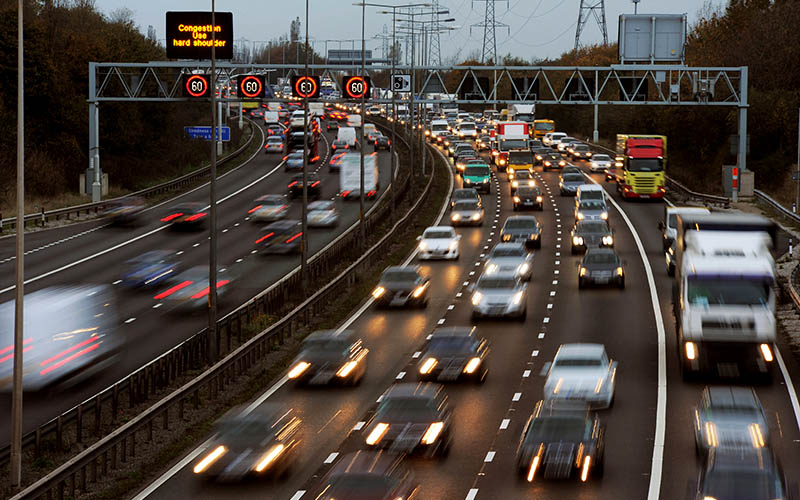
Built on five dimensions—license plate retroreflective imaging logic, ROI precision illumination, pulse-synchronized imaging, human-eye MPE safety assessment, and full-lifecycle cost—infrared laser illumination solves the pain points of traditional LED illumination, such as limited distance, easy overexposure, and severe motion blur. As AI intelligent traffic surveillance moves from "capturing images" to "judging accurately, responding fast, and coordinating seamlessly," infrared laser illumination is no longer just a tool for lighting up license plates, but a key link that determines imaging quality, recognition efficiency, and the upper limit of system capability.
I. Pain Point: LED Night-Vision Illumination Has Hit Its Capability Ceiling
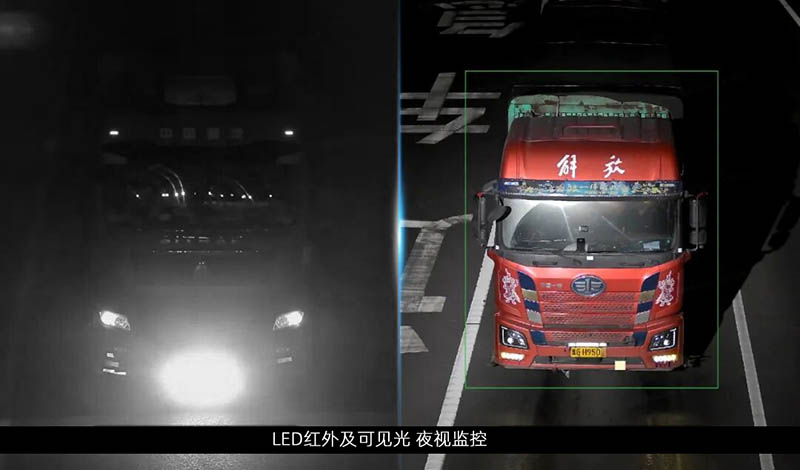
In road traffic surveillance, the mainstream nighttime license plate recognition illumination solution has long been low-illumination visible-light LED rather than infrared. The reason is that intersection surveillance often also needs to see body color, driver features, and other information; infrared can only provide black-and-white images with relatively limited information. Infrared LED is adopted only in specific scenarios where light pollution must be reduced and glare avoided. Although low-light full-color technology continues to advance, it still struggles to clearly monitor fast-moving dynamic targets.
LED-based night-vision surveillance is increasingly unable to meet the expectations of AI intelligent traffic surveillance. Its inherent shortcomings center on five points:
Short distance: Effective license plate recognition distance is usually within 25 meters;
No zoom: Near areas easily overexpose while far areas lack illumination;
Limited shutter: Difficult to support synchronized high-speed shutters, so moving license plates easily blur;
Insufficient light intensity: Difficult to suppress strong light interference such as headlights;
Difficulty adapting to AI evolution: Multi-frame capture, cross-lane capture, simultaneous multi-function application, and other needs are stretched thin.
These shortcomings are especially prominent at provincial border checkpoints on expressways, long tunnel exits, and park and port checkpoints without municipal lighting.
II. Cause: Two Design Logics Determine That the Light Source Must Switch Tracks
1. Visible-light and infrared license plate recognition are two completely different design logics
The microprism retroreflective film on license plates was originally intended to improve human-eye visibility—color recognition by day, reflective brightness at night. Infrared recognition is only a secondary application. It relies on the combination of "infrared-adapted optics + license plate retroreflective properties + plate geometry detection + OCR character recognition + backend database verification" to complete recognition. Ordinary infrared cameras lack this algorithm chain and cannot complete license plate recognition through imaging alone.
The technical chain of infrared recognition itself is mature; the real shortcoming lies in the illumination light source: Imaging (optics and illumination layer, most critical, determines whether characters can be read) → Rectification (ISP processing, straightening perspective distortion, combating headlight glare, noise, and halo) → Character recognition (AI detection + OCR, recognizing only character contours and shapes, not colors) → Identification (backend database determining plate type and vehicle type).
2. Market demand and technological development jointly push the light source toward laser
In the smart transportation era, nighttime traffic surveillance is no longer limited to license plate recognition; it also includes electronic policing, facial recognition, in-vehicle condition monitoring, and the detection and evidence collection of public security and driving safety prevention. On east-west roads with strong backlight, daytime also requires filters combined with infrared laser illumination to obtain clear surveillance images.
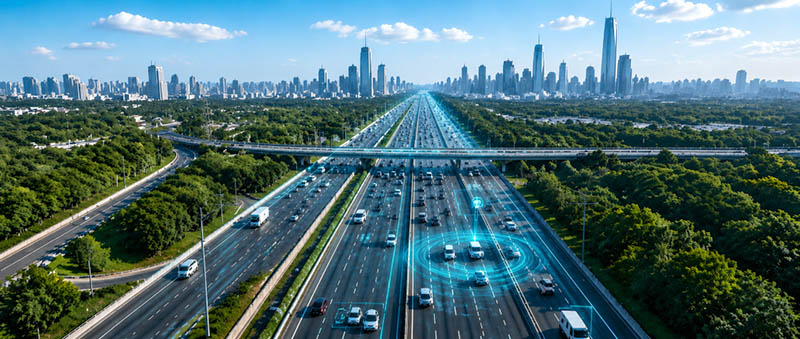
AI intelligent traffic surveillance presents four characteristics: Simplicity (simplified integrated coordinated recognition), Multiplicity (multi-modal fusion analysis), Scale (large-model cloud-based judgment), and Precision (holographic perception and precise control), driving the system from "capturing images" to "judging accurately, responding fast, and coordinating seamlessly." Single visible light, infrared illumination, thermal imaging, or radar alone can no longer meet demand; multi-source fusion and low-altitude + ground three-dimensional perception have become the direction. Infrared laser illumination—with microsecond-level light emission, ultra-long effective distance, and simultaneous coverage of 16 lanes—has long been indispensable in this system.
III. Solution: Four Capabilities That Precisely Fill LED's Shortcomings
1. Effectively cooperating with ROI zoned surveillance—precise "point-and-shoot"
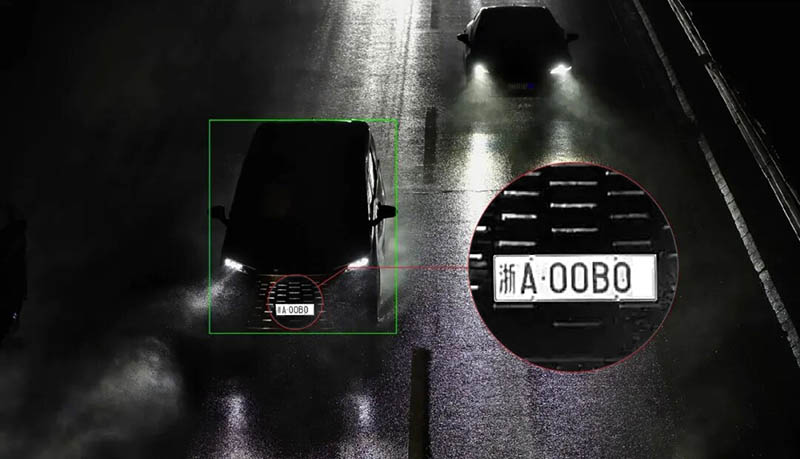
Infrared laser has good collimation. With DOE diffractive optical elements and beam-shaping lenses, the laser spot can be optically shaped for the ROI, precisely constrained within the lane capture ROI area, delivering infrared energy only to the preset vehicle-landing area, with almost no laser radiation in non-target areas, reducing stray light and opposing glare. At the image recognition level, it supports drawing a polygon in the frame to tell AI to look for license plates only inside the box, reducing false recognition and lowering computing load.
This capability directly supports narrow-field precise capture scenarios such as ramps, turning lanes, and interchanges, and also serves covert enforcement and anti-glare checkpoints—concentrated beams with little spillover do not disturb drivers' vision and suit urban road sections sensitive to light pollution.
2. Improving recognition system efficiency: from "relying on algorithms" to "optimizing the source"
Wide dynamic range multi-exposure fusion (WDR) is the first link in infrared-illuminated license plate recognition, using DSP technology to fuse two images and combining HLC for strong-light suppression, solving the huge illumination difference of "extremely bright headlights, pitch-black license plate."
Infrared laser has good collimation and concentrated energy, can synchronize with microsecond-level high-speed shutter pulsed emission, and solves motion blur and fuzziness caused by vehicle movement. Combined with filters, it can penetrate strong ambient light such as headlights, greatly reducing dependence on DSP and HLC, clearly capturing license plate contours, and directly providing image information to ISP for rectification. This simplifies the traditional infrared license plate recognition chain, shifting "recognition efficiency" from "backend optimization" to "frontend assurance," reducing surveillance system computing pressure and cost.
On unlit national roads, rural road checkpoints, or park entrances, mining areas, port container checkpoints, and underground long slopes where vehicle headlights create strong backlight, cameras may need shutter speeds of 1/10,000 second or even shorter to freeze license plates and eliminate motion blur. Within such a short exposure window, only laser illumination can instantly provide enough peak optical power for imaging.
3. Satisfying simultaneous multi-function illumination: one device, full coverage
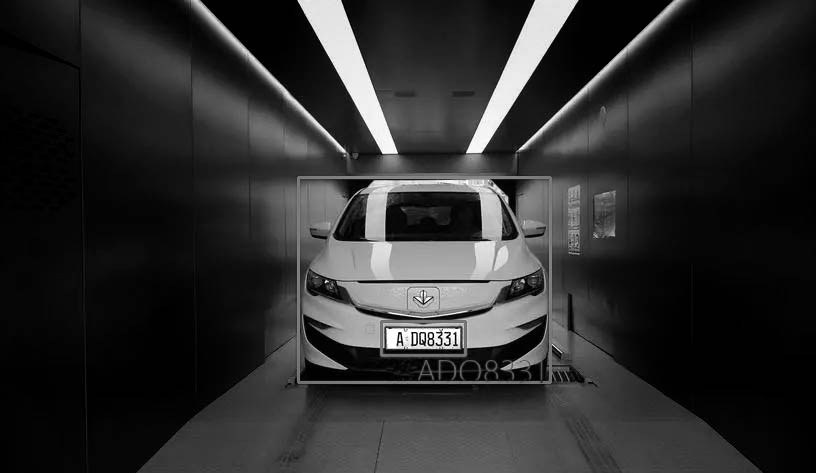
Supports AI detection triggering, synchronized zoom, and on-demand light emission, balancing near and far distances and multi-lane precise ROI capture. From routine capture to on-demand capture, one device can satisfy multi-function intelligent illumination for electronic policing, through-window monitoring, facial recognition, license plate recognition, and more.
This is precisely the foundation of AI intelligent integrated enforcement scenarios:
At checkpoints for overloading, seatbelt non-use, or in-vehicle violations, license plates can be clearly seen from a hundred meters away while simultaneously seeing through tinted windows to observe in-vehicle conditions;
At speed-measurement checkpoints, multi-target tracking, and continuous multi-plate capture, high-speed high-frame-rate and multi-frame re-capture are stably achieved;
Ultra-long-distance expressway checkpoints and mainline surveillance (provincial toll stations, long tunnel entrances and exits) likewise rely on this capability to capture clear license plate features of vehicles a hundred meters or even several hundred meters away.
4. Breakthrough in human-eye safety: from "AEL standards" to "MPE actual risk assessment"
Human-eye safety is a core concern of infrared laser applications. According to GB/T 7247.1-2024 or IEC 60825-1:2014 classification, Class 1 lasers are intrinsically safe, at the level of a few tenths of a milliwatt; Class 2 typically does not exceed 1 milliwatt under a 0.25-second time base; Class 3B is within 500 milliwatts. Yet infrared LEDs used in daily night-vision surveillance, satisfying short-distance illumination of twenty to thirty meters, already reach output powers of tens to thousands of milliwatts. Clearly, Class 1, 2, and 3B infrared light sources meeting the accessible emission limit (AEL) cannot satisfy night-vision surveillance illumination needs—and judging whether a complete device is safe solely by the light source classification label is also not rigorous.
The standard also provides another judgment method—maximum permissible exposure (MPE): calculating the irradiance at a specific location and comparing it with the corresponding MPE limit. The following table lists several infrared laser illuminators commonly used for license plate recognition, facial recognition, and through-window monitoring, comparing their human-eye safety performance under a 0.25-second exposure time with the Class 1 laser MPE limit:
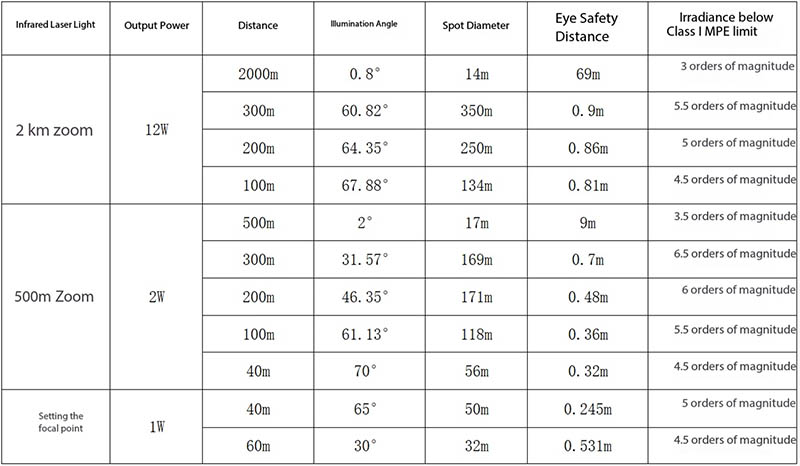
From the data, as the infrared laser illuminator's beam angle and illumination distance change, the energy density per unit area drops significantly, and the irradiance within the safe distance is far below the Class 1 laser MPE limit. Taking the 2-km model as an example, at 2,000 meters the human-eye irradiance within the spot is about 1,000 times lower than the Class 1 laser safety limit. Combined with multiple designs such as pulse-synchronized energy limiting, distance gating, AI intelligent monitoring, microsecond-level strobe emission, and software/hardware fail-safe designs, human-eye safety is systematically guaranteed.
IV. Selling Points: Versatile and Precise, Diluting Full-Lifecycle Costs
Infrared laser illumination, with its advantages of good collimation, concentrated energy, narrower bandwidth, good spot uniformity, and precise ROI lane illumination, supports microsecond-level shutter exposure, reduces the impact of light scattering, improves license plate light-dark contrast (signal-to-noise ratio), and thereby enhances recognition efficiency and accuracy.
One light source can simultaneously monitor single and multiple lanes, synchronize zoom to balance near and far, and support multiple functional applications. In engineering terms, this means one laser illuminator can replace multiple fixed-focus LEDs, reducing pole load, wiring points, and maintenance climbing times, thereby diluting equipment costs, engineering costs, and maintenance costs.
The process from light source to finished product is already very mature: infrared laser illuminators offer excellent consistency, wavelength temperature sensitivity (temperature drift) as low as 0.06nm/°C, and an operating temperature range meeting -40°C to +85°C industrial-grade requirements; 50,000-hour ultra-long service life, with light decay within 5% after 20,000 hours of continuous use.
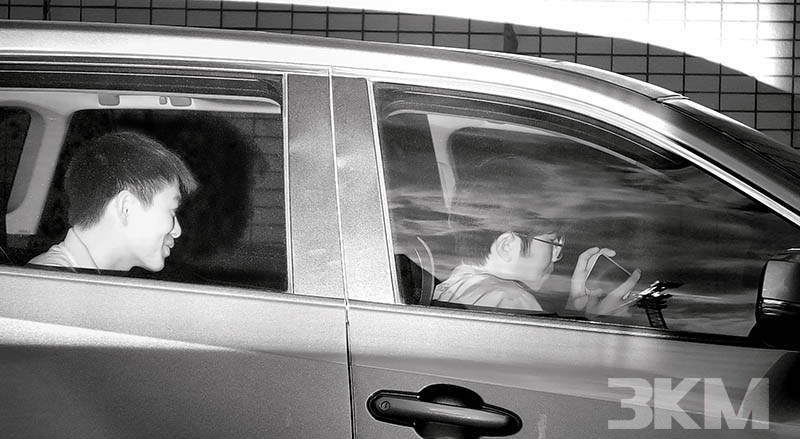
Test result: 1/10,000-second high-speed shutter infrared laser through-window imaging of a vehicle traveling at 100 km/h
Conclusion:
As AI intelligent traffic surveillance moves from "capturing images" to "judging accurately, responding fast, and coordinating seamlessly," the illumination light source is no longer just a tool for lighting up license plates, but a key link that determines imaging quality, recognition efficiency, and the upper limit of system capability. Infrared laser is becoming the well-deserved driving force behind AI-era license plate recognition traffic surveillance.


